Driving in Costa Rica: Rentals, Insurance and Road Conditions
In this guide
The single most useful thing to know before renting a car in Costa Rica is that the price you were quoted online is not the price you will pay. Costa Rica requires every vehicle on its roads to carry third-party liability insurance, that cover cannot be removed from a rental, and comparison sites almost never include it in the headline rate. A US$12-a-day car can arrive at the counter as a US$45-a-day car, and the difference is not a scam — it is a legal requirement that the quote left out.
The second most useful thing is that your credit card’s rental benefit does not satisfy it. Card coverage pays for the rental vehicle. The mandatory Costa Rican cover pays for the person you hit. They are different products and one cannot stand in for the other.
Everything below reflects US State Department guidance dated 4 September 2026, Costa Rican rental operators’ own posted terms, and ARESEP fuel and toll decisions read in October 2026. Confirm current figures before you travel.
The insurance, in plain terms
Costa Rican rental insurance comes in two unrelated layers, and conflating them is where most of the confusion and most of the overcharging happens.
| Mandatory liability | Vehicle damage cover | |
|---|---|---|
| Common labels | SLI, TPL, SOA | CDW, LDW, “basic coverage with deductible” |
| What it pays for | Injury and damage to other people and their property | Damage to the car you rented |
| Can you decline it? | No | Yes, usually |
| Can a credit card replace it? | No | Sometimes, with conditions |
| Included in the online rate? | Rarely | Rarely |
The mandatory layer. Costa Rican rental operators state this in their own published terms. Budget’s Costa Rica site puts it directly: third-party liability insurance, also known as TPL, is mandatory in Costa Rica; it covers damage to third parties rather than the rented car; and it cannot be removed from the rental. Different operators label the same product SLI, TPL or SOA. The label changes; the obligation does not.
The damage layer. This is the one your credit card may cover. Operators generally allow you to decline their damage product if you can prove card coverage, but the proof required is formal — operators typically require a letter from the issuing bank confirming cover, presented at the counter, and some warn that card policies may exclude Costa Rica or exclude the vehicle class you booked. Where you decline the damage product, expect a larger hold on your card.
Three practical consequences:
- Get a written all-in quote. Ask the operator to itemise the daily rate, the mandatory liability cover, any damage product, airport concession fees, additional-driver charges and the card hold. Compare those totals, not the headline rates.
- If you intend to use card coverage, bring the letter. Not the benefits guide — the letter, naming you, the dates and Costa Rica.
- Budget for a hold, not just a charge. The deposit blocked on your card can be substantial and varies by operator and vehicle class.
We could not find an operator publishing the daily price of the mandatory cover in a form we could verify. Independent guides put it somewhere in the region of US$10 to US$25 a day depending on vehicle class and operator. Treat that as a range to sanity-check a quote against, not as a figure to rely on.
What the roads are actually like
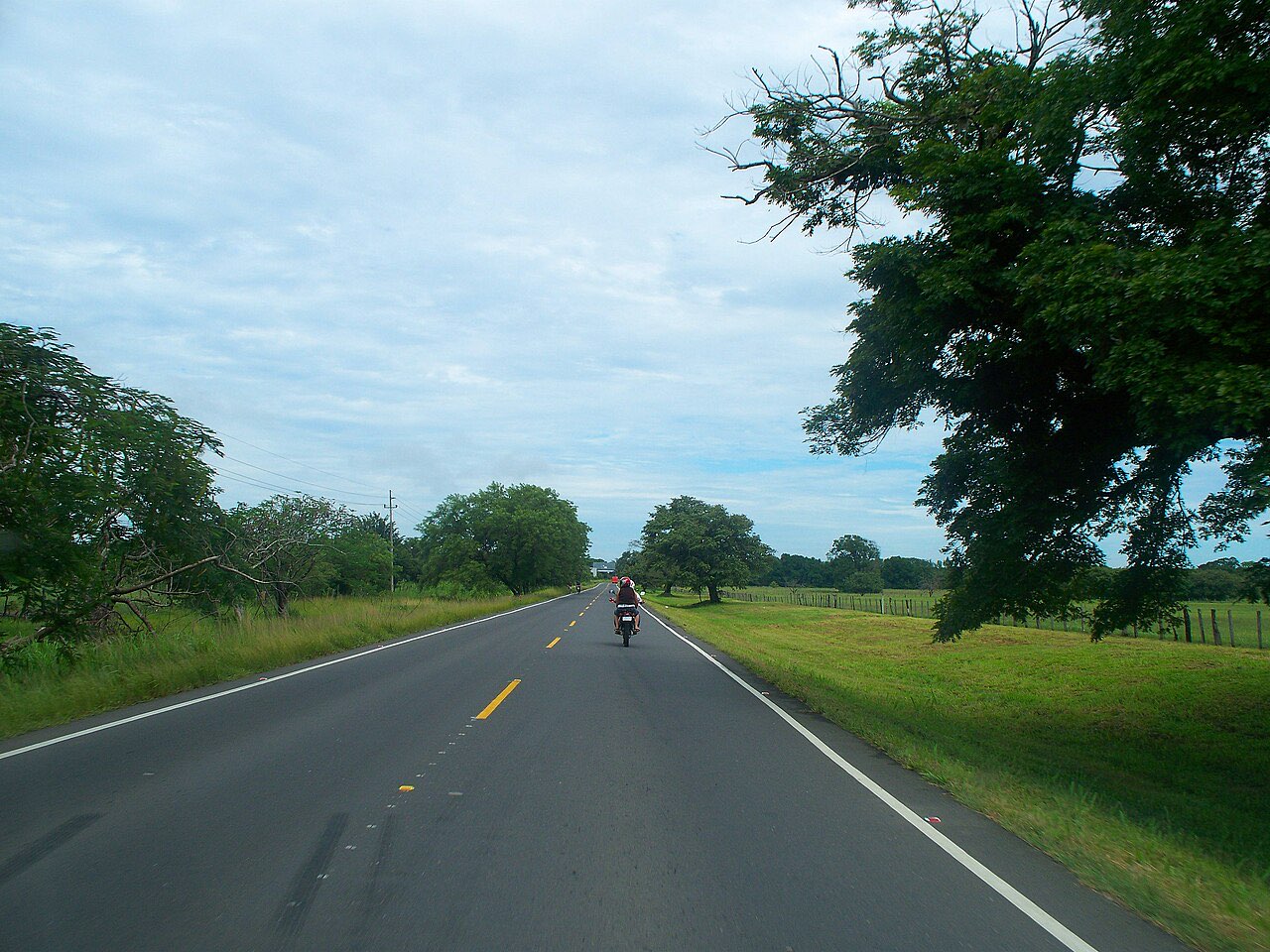
The State Department’s description of Costa Rican roads is short and unsentimental, and it maps closely to what drivers report:
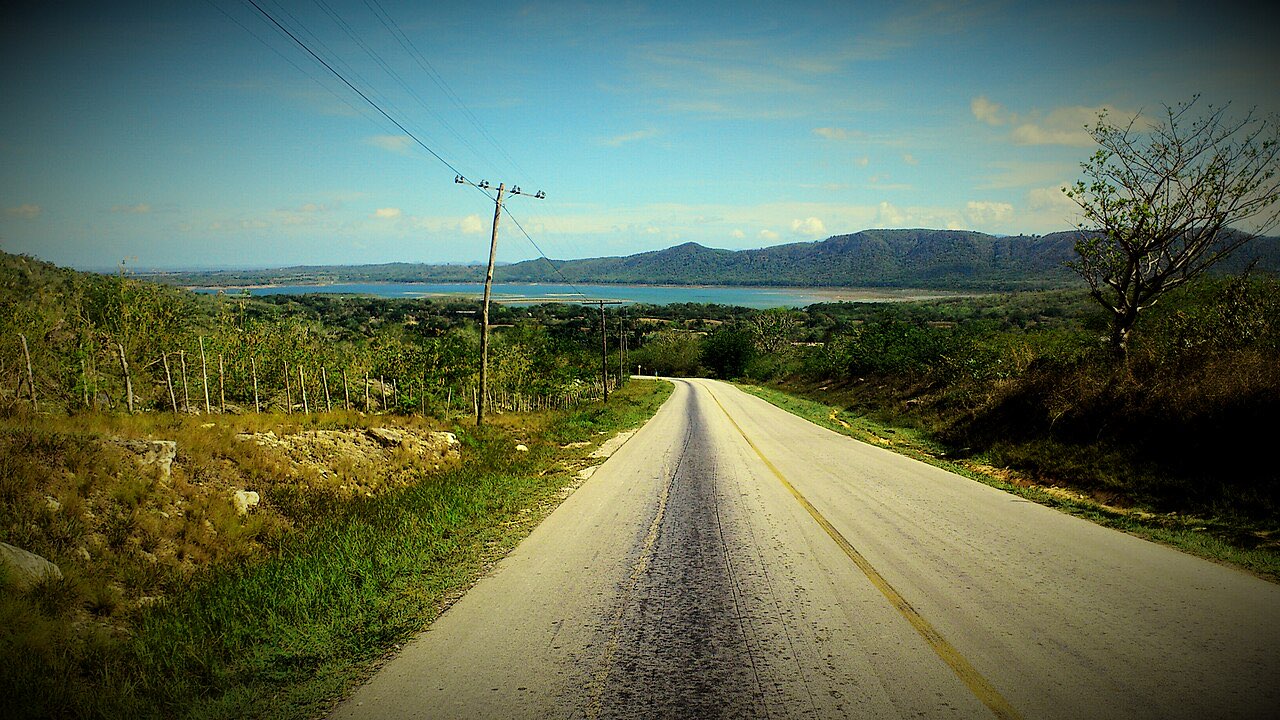
Roads can have unclear lane markings, narrow shoulders, and large potholes.
Add to that: signage that is often unclear, intersections where vegetation blocks visibility, motorcyclists passing on the right and weaving, and buses and cars that stop suddenly. Traffic around San Jose is heavy and slow.
Two structural quirks deserve their own mention. Bridges, even on heavily travelled roads, may be a single lane — you meet oncoming traffic head-on at a bridge and someone yields. And rural roads sometimes lack bridges altogether, which brings us to the water.
River crossings and the 4x4 question
Costa Rica’s rivers cross roads at grade in a number of rural areas, especially on the Nicoya and Osa peninsulas and on back routes to beach towns. The official advice is blunt and applies regardless of what you are driving:
Drive carefully when crossing moving water, such as riverbeds. Even a small amount of water can make your vehicle unstable.
And: do not drive through water if you cannot see its depth. A four-wheel-drive vehicle does not make moving water safe. It makes loose, steep or rutted ground passable, which is a different problem.
The honest answer on 4x4 is that it is an itinerary question. The State Department says main urban highways are paved but roads to beaches and rural areas may not be, and that some places are only reachable with four-wheel drive. It does not name which places, and neither will we — operators and guidebooks disagree, and road surfaces change between dry and wet seasons.
Take a 4x4 if:
- You are going somewhere your accommodation describes as reachable by unpaved road, and they say the last stretch is steep, rutted or forded.
- You are travelling in the April-to-October rainy season and heading off the main highways, when landslides can block roads and unpaved surfaces degrade.
- Your plan includes remote parts of the Osa Peninsula or similar, where getting stuck is an expensive problem a long way from help.
A standard car is usually enough if:
- Your route is San Jose, the Central Valley, La Fortuna, Manuel Antonio and the main Guanacaste beach towns on paved roads.
- You are travelling in the drier months and staying on numbered highways.
The reliable test is not a guidebook. It is emailing each place you are staying and asking exactly what the last kilometre to their gate looks like, and whether anything on the way is forded. Our Costa Rica rainy season guide covers how much the surface changes between seasons, and the Costa Rica 10-day itinerary sets out which legs are genuinely long drives.
Fuel, tolls and the running costs
Fuel. Prices are regulated nationally, so every station charges the same, and attendants fill the tank for you. From the ARESEP adjustment of 1 October 2026, prices were set at approximately:
| Grade | Price per litre | Rough USD per litre |
|---|---|---|
| Super | CRC 764 | ~US$1.60 |
| Regular | CRC 719 | ~US$1.50 |
| Diesel | CRC 785 | ~US$1.65 |
Those were increases of CRC 38, CRC 12 and CRC 97 respectively on the previous prices. A further rise was proposed for November 2026 but had not been approved when this was written. USD conversions use roughly CRC 475 to the dollar — the colon moved considerably through 2026 — and are indicative. Our Costa Rica money guide covers cards, colones and what to carry.
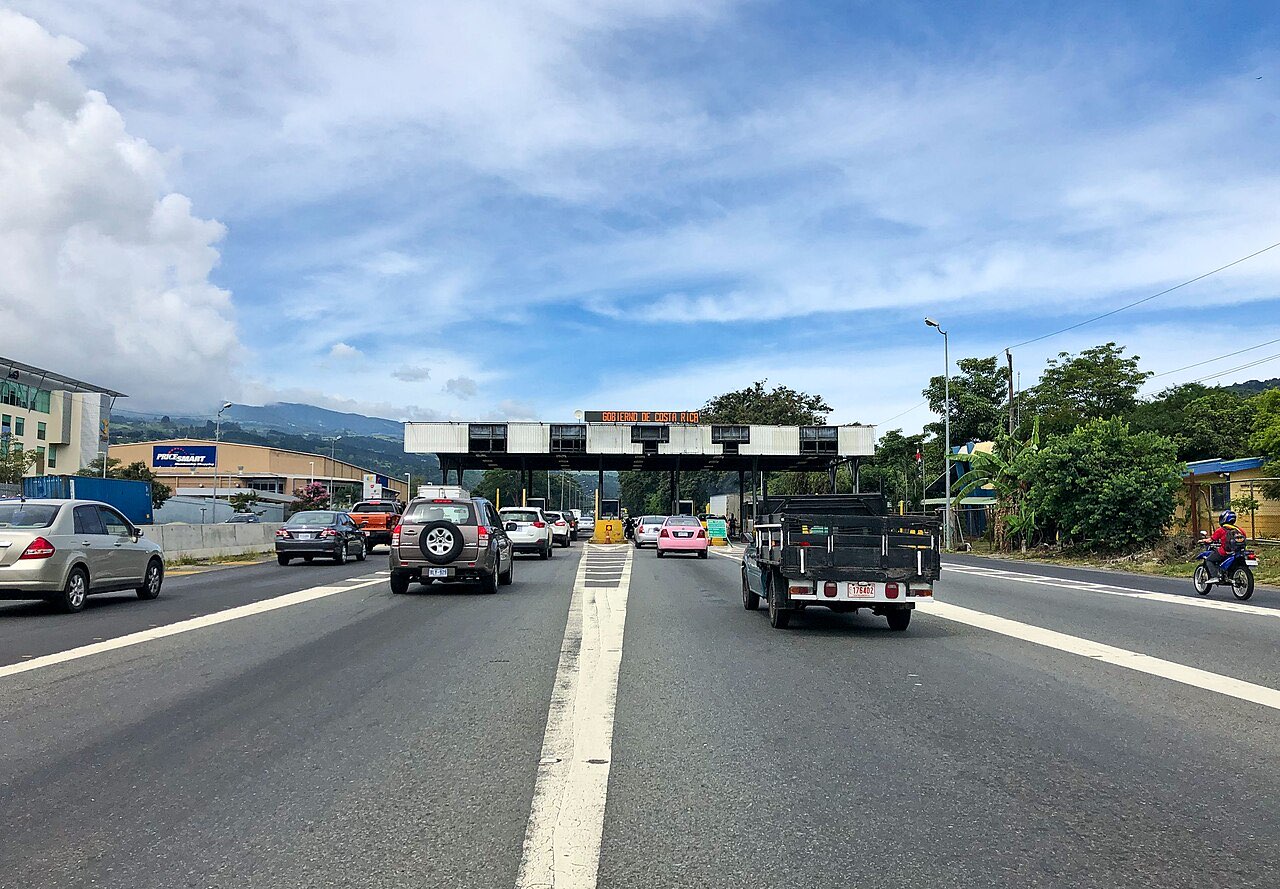
Tolls. Concentrated around San Jose and on Ruta 27, the toll highway running west from the capital towards Caldera and the central Pacific coast. From 1 July 2026, the light-vehicle (Class 1) tolls were CRC 380 at Escazu, CRC 580 at San Rafael, CRC 760 at Atenas and CRC 580 at Pozon, with the Ciudad Colon branch at CRC 190. The full San Jose to Caldera run therefore costs about CRC 2,300, roughly US$5. Rates are adjusted quarterly and for exchange-rate movements, and the concessionaire publishes current figures.
Keep small notes and coins in the car. Fumbling for change at a toll booth with a queue behind you is the most avoidable stress of a Costa Rican road trip.
Police stops, documents and fines
You must carry a valid passport and either a US driver’s licence or an international driving permit. Keep the rental agreement with you. The passport question is separate from the licence: US travelers do not need a visa for a stay under 180 days, and the officer writes the number of days you actually get. That is covered in Costa Rica visa and entry requirements.
Fines are not nominal: routine traffic violations “can be over $500 USD”. Speed limits and traffic laws are, in the State Department’s description, often ignored, turn signals rarely used, and pedestrians do not always get right of way — which is a warning about other drivers more than about enforcement.
One financial detail that catches people after they have gone home: US citizens have reported to the embassy that rental companies charge their credit cards for unpaid tickets, and the embassy cannot help with those cases. If you are stopped and ticketed, photograph the ticket and deal with it before you return the car.
After an accident: the rule that matters most
Do not move the vehicle. Both the traffic police and an insurance investigator must make accident reports before vehicles can be moved. Rental companies may fine drivers for failing to file a report, so call the operator as well as 911.
In a fatal collision, a judge must attend the scene to pronounce death, which can take several hours, and the State Department warns that an ongoing investigation “may prevent you from leaving the country for months”. This is the strongest argument there is for not driving outside urban areas at night, which is the explicit official advice.
Theft from vehicles
Costa Rica’s rental-car crime pattern is specific and worth naming. Thieves use electronic signal jammers to block key fobs, so the car you thought you locked never locked. Always check the door physically after pressing the fob.
Beyond that: never leave valuables in an unattended vehicle, even locked, and never leave anything on a beach while you swim. Beach car parks are a known target. The Costa Rica safety guide covers the wider picture.
A short pre-booking checklist
- Ask for a written all-in quote including mandatory liability, damage cover, airport fees and the card hold.
- Decide on your damage cover before the counter, and bring the bank letter if you intend to rely on a card.
- Email every property and ask what the final approach road is like, and whether any river is forded.
- Match the vehicle to the worst road on your route, not the average one.
- Download offline maps. Signage is unreliable and coverage is patchy in the hills.
- Plan daylight driving. Distances in Costa Rica are short and the times are long.
- Keep CRC 3,000 in small notes in the car for tolls and parking attendants.
Costa Rica rewards having your own car more than almost any country of its size — the national parks, the cloud forest and the beach towns are strung along roads rather than connected by a transport network, and our Costa Rica national parks guide assumes you can reach their gates. Price the insurance honestly, pick the vehicle for the worst road you will actually drive, and the rest is a straightforward, if slow, drive.
Before you book, check current conditions and requirements on the State Department’s Costa Rica page and the current Ruta 27 tariffs at globalviaruta27.com, and get the insurance position from the operator in writing. For the visa, the passport and the onward ticket, use Costa Rica visa and entry requirements.
Frequently asked questions
Why is my Costa Rica rental car quote so much higher at the counter?
Because the online rate almost never includes the mandatory third-party liability insurance, which is required in Costa Rica and cannot be removed from the rental. Operators' own pages describe it as mandatory and non-removable. Add airport concession fees, any vehicle damage product you take, and additional-driver charges, and a headline daily rate can land at several times its quoted figure. The fix is to ask for a written all-in quote before you book.
Can my credit card's insurance replace Costa Rica's mandatory coverage?
No. A credit card's rental benefit covers damage to the rental vehicle. Costa Rica's mandatory cover is third-party liability, which is a different thing entirely: it pays for the other person's injuries or property. They are not substitutes, and no rental company can waive the liability cover for you. Where a card is sometimes accepted is in place of the operator's own damage product, and even then operators typically demand a formal letter from the issuing bank first.
Do I really need a 4x4 in Costa Rica?
It depends on where you are going, not on the country. The US State Department notes that main urban highways are paved but that 'roads to beaches and rural areas might not be' and that 'some places may only be accessible with a 4-wheel drive vehicle'. If your itinerary is San Jose, La Fortuna, Manuel Antonio and the main Guanacaste beach towns by the paved routes, a standard car is usually enough. Ask your accommodation specifically what the last kilometre to their gate is like.
What happens if I have an accident in a rental car?
Do not move the vehicle. Both the traffic police and an insurance investigator must make their reports before vehicles can be moved, and rental companies may fine drivers who fail to file a report. In a fatal accident a judge has to attend the scene to pronounce death, which can take hours, and the State Department warns that ongoing investigations may prevent you leaving the country for months. Call 911 and then the rental company, in that order.
How much does fuel cost in Costa Rica?
From the ARESEP adjustment of 1 October 2026, pump prices were set at about CRC 764 a litre for super, CRC 719 for regular and CRC 785 for diesel, roughly US$1.50 to US$1.65 a litre. Prices are regulated nationally, so they are the same at every station, and they are adjusted frequently. Attendants pump the fuel for you. A further increase was under consideration for November 2026 but had not been approved when this was written.
Are there tolls, and how do I pay them?
Yes, mostly around San Jose and on Ruta 27 to the Pacific. From 1 July 2026 the Ruta 27 light-vehicle tolls were CRC 380 at Escazu, CRC 580 at San Rafael, CRC 760 at Atenas and CRC 580 at Pozon, so about CRC 2,300 (roughly US$5) for the full run. Rates are adjusted quarterly and for exchange-rate movements. Keep small colon notes and coins in the car.
Keep planning
- Costa Rica Visa & Entry Requirements (2026)
Costa Rica visa requirements for US travelers: no visa for stays under 180 days, passport and onward-ticket rules, and no digital arrival form.
Updated Nov 2026 - Is Costa Rica Safe? Crime, Driving and Beach Hazards
Is Costa Rica safe? The Level 2 advisory explained, where theft concentrates, rip currents and drowning, car break-ins, taxis, methanol and what to plan for.
Updated Oct 2026 - La Fortuna and Arenal Guide: Volcano, Hot Springs, Waterfall
La Fortuna and Arenal guide: the US$15 national park fee and trails, La Fortuna Waterfall, hanging bridges, how to choose a hot spring, and how many days to stay.
Updated Oct 2026